ESP32-S3 vs ESP32-S31: What’s the Difference and Which ESP32 Should You Choose?
The ESP32-S3 has become one of the most popular microcontrollers for advanced IoT projects, smart displays, embedded AI, audio processing and connected devices. But Espressif has now introduced a significantly more powerful member of the ESP32 family: the ESP32-S31.
At first glance, the names ESP32-S3 and ESP32-S31 look very similar. Internally, however, they represent two quite different generations of Espressif technology.
The ESP32-S3 uses Espressif's established dual-core Xtensa LX7 architecture running at up to 240 MHz, while the ESP32-S31 moves to a dual-core 32-bit RISC-V architecture running at up to 320 MHz. The newer chip also adds Wi-Fi 6, Bluetooth 5.4, IEEE 802.15.4 for Thread and Zigbee, Gigabit Ethernet MAC and considerably more advanced multimedia capabilities.
So, should you continue using the proven ESP32-S3 or start designing around the new ESP32-S31?
Let's compare them.
ESP32-S3 vs ESP32-S31 at a Glance
| Feature | ESP32-S3 | ESP32-S31 |
|---|---|---|
| CPU Architecture | Dual-core Xtensa LX7 | Dual-core 32-bit RISC-V |
| Maximum CPU Frequency | 240 MHz | 320 MHz |
| Internal SRAM | 512 KB | 512 KB |
| Wi-Fi | 2.4 GHz 802.11 b/g/n | 2.4 GHz Wi-Fi 6 / 802.11ax |
| Bluetooth | Bluetooth 5 LE | Bluetooth 5.4 LE + Bluetooth Classic |
| Thread / Zigbee | No integrated 802.15.4 radio | Yes |
| IEEE 802.15.4 | No | Yes |
| GPIO | Up to 45 | Up to 60 |
| Ethernet MAC | No integrated Ethernet MAC | Up to 1000 Mbps Ethernet MAC |
| USB | Full-Speed USB OTG | High-Speed USB OTG |
| AI / DSP Acceleration | SIMD/vector acceleration | Enhanced SIMD + multimedia acceleration |
| Camera Support | Camera interface | 8/16-bit DVP camera interface |
| Display Support | LCD interface | Up to 24-bit RGB + I8080 + MOTO6800 |
| Image Acceleration | Limited | JPEG codec, PPA and 2D-DMA |
| Typical Use | IoT, displays, automation, embedded AI | Advanced AIoT, gateways, HMI, multimedia, Matter |
The ESP32-S31 is therefore more than simply a faster ESP32-S3. It expands the ESP32 platform into applications that would previously have required additional connectivity or multimedia ICs.
1. Xtensa vs RISC-V: The Biggest Architectural Change
The ESP32-S3 uses two Xtensa LX7 processor cores operating at up to 240 MHz.
This architecture is well established and is supported by a mature ESP32 software ecosystem. The S3 also includes SIMD/vector instructions that help accelerate signal-processing and neural-network workloads.
The ESP32-S31 makes a major change by moving to:
Dual-core 32-bit RISC-V @ up to 320 MHz
One of the S31 cores includes a wide 128-bit data path with SIMD instructions designed for highly parallel workloads such as:
Edge AI inference
Audio processing
Computer vision
Signal processing
Image manipulation
Multimedia interfaces
For developers interested in the long-term direction of the ESP32 platform, the transition to RISC-V is particularly significant.
Winner: ESP32-S31
For raw processing capability and next-generation architecture, the S31 clearly moves ahead.
2. Wi-Fi: Wi-Fi 4 vs Wi-Fi 6
The ESP32-S3 supports:
2.4 GHz 802.11 b/g/n Wi-Fi
This is perfectly adequate for the vast majority of sensor nodes, smart appliances, controllers, dashboards and home-automation projects.
The ESP32-S31 upgrades wireless connectivity to:
2.4 GHz Wi-Fi 6 (802.11ax)
Wi-Fi 6 can provide improved efficiency when many devices share the same wireless network and is particularly attractive for modern IoT deployments.
For a simple temperature sensor or home-automation controller, this upgrade may not substantially change the application.
For products expected to remain in production for many years, however, Wi-Fi 6 makes the S31 considerably more future-oriented.
Winner: ESP32-S31
3. Bluetooth Is a Much Bigger Upgrade Than It Looks
ESP32-S3 supports Bluetooth 5 Low Energy.
Importantly, it does not provide Bluetooth Classic.
ESP32-S31 supports Bluetooth 5.4, including both Bluetooth Low Energy and Bluetooth Classic BR/EDR. Espressif also highlights capabilities including LE Audio, Bluetooth Mesh 1.1 and direction finding.
That potentially makes the S31 substantially more capable for:
Smart speakers
Wireless audio
Voice interfaces
Automotive accessories
Bluetooth gateways
Location-aware devices
Advanced wearable products
Winner: ESP32-S31
4. Zigbee, Thread and Matter
This is another major difference.
The ESP32-S3 does not include an IEEE 802.15.4 radio.
The ESP32-S31 integrates IEEE 802.15.4, allowing it to support technologies such as:
Thread
and
Zigbee
Espressif also positions the S31 for Matter over Wi-Fi as well as Matter over Thread.
This makes the ESP32-S31 particularly interesting for developers building:
Matter smart-home hubs
Smart switches
Lighting controllers
Home automation gateways
Zigbee coordinators
Thread border-router related hardware
Multi-protocol IoT products
Previously, such applications often required an ESP32 together with another radio MCU.
Winner: ESP32-S31
5. GPIO: 45 vs 60
ESP32-S3 already provides an impressive 45 programmable GPIOs.
The ESP32-S31 increases this to as many as 60 GPIOs.
Extra GPIO can become extremely useful in applications involving:
Large displays
Parallel camera buses
Memory interfaces
Multiple UART devices
Industrial control
Motor control
Audio interfaces
Keypads
Large numbers of sensors
For smaller IoT devices this may not matter, but for complex controller boards it can simplify PCB design considerably.
6. Displays and Human-Machine Interfaces
The ESP32-S3 is already widely used for display projects and supports LCD and camera interfaces.
The S31 goes considerably further.
Espressif specifies support for:
8/16-bit DVP cameras
8–24-bit parallel RGB LCD
I8080 display interface
MOTO6800
Hardware colour-space conversion
JPEG hardware codec
Pixel Processing Accelerator (PPA)
2D-DMA
Up to 14 capacitive touch channels
This makes the ESP32-S31 extremely interesting for products such as:
Smart control panels, industrial HMIs, video doorbells, smart appliances, touchscreen controllers and multimedia IoT terminals.
Winner: ESP32-S31
7. Ethernet
ESP32-S31 also integrates a 1000 Mbps Ethernet MAC.
That does not mean you can connect an RJ45 connector directly to the bare chip—you still need the appropriate external Ethernet PHY and interface circuitry—but it greatly expands the type of networked products that can be designed around the S31.
Possible applications include:
Industrial gateways
Building automation controllers
Matter gateways
Network appliances
Smart-home hubs
Ethernet-to-Wi-Fi bridges
Industrial data acquisition systems
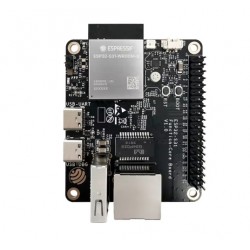
Hubtronics also lists an ESP32-S31 development platform incorporating Gigabit Ethernet for experimenting with these capabilities.
8. ESP32-S3 Still Has One Major Advantage: Maturity
With all these specifications, it may appear that everyone should immediately move to ESP32-S31.
Not necessarily.
ESP32-S3 is a mature platform with extensive existing software, development boards, example projects and a large installed developer base. Espressif describes the S3 as being supported by its mature ESP-IDF architecture.
ESP32-S31, by comparison, was only announced in March 2026. Espressif is bringing ESP-IDF, ESP-Matter, ESP-GMF, ESP-Hosted and ESP-AT support to the platform.
Therefore, for projects that need to enter production immediately and do not require S31-specific features, the ESP32-S3 can still be the more practical choice.
When Should You Choose ESP32-S3?
Choose ESP32-S3 when your project needs:
Proven ESP32 ecosystem
2.4 GHz Wi-Fi
Bluetooth Low Energy
USB
Camera or display interface
Embedded AI
Voice recognition
Sensor processing
Moderate HMI applications
Large existing Arduino/ESP-IDF ecosystem
Cost-effective mass production
For many IoT products, the ESP32-S3 remains more than powerful enough.
ESP32-S3 Products Available from Hubtronics
ESP32-S3 Development Board
7Semi ESP32-S3-WROOM-1-N16R8 16MB Flash + 8MB PSRAM ESP32-S3 DevKitC-1
A good choice for development, prototyping and learning.
ESP32-S3 Module with PCB Antenna
Espressif ESP32-S3-WROOM-1-N16R8 – 16MB Flash + 8MB PSRAM
Suitable for integrating the ESP32-S3 directly into a custom PCB.
ESP32-S3 Module with External Antenna Connector
Espressif ESP32-S3-WROOM-1U-N16R8 – 16MB Flash + 8MB PSRAM
Useful when the product requires an external antenna or is installed inside a metallic/enclosed housing.
When Should You Choose ESP32-S31?
Consider ESP32-S31 when designing a new product requiring:
Wi-Fi 6
Bluetooth 5.4
Bluetooth Classic
Thread
Zigbee
Matter
Higher CPU performance
More GPIO
Advanced displays
Camera processing
Audio applications
Advanced edge AI
Gigabit Ethernet
Multi-protocol gateways
It is particularly attractive for products that would otherwise require several separate controllers or wireless chips.
ESP32-S31 Products Available from Hubtronics
ESP32-S31 Development Platform
Espressif ESP32-S31-Function-CoreBoard-1 – Wi-Fi 6, Bluetooth 5.4, Thread/Zigbee & Gigabit Ethernet
This is one of the easiest ways to start exploring the new ESP32-S31 platform. The board includes an ESP32-S31-WROOM-3 module, 16MB Flash, 16MB PSRAM and Gigabit Ethernet connectivity.
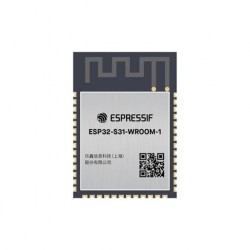
ESP32-S31-WROOM Module
Espressif ESP32-S31-WROOM-1-N16R16V – 16MB Flash + 16MB PSRAM
A module option for developers planning custom ESP32-S31 PCBs.
ESP32-S31-WROOM-3
Espressif ESP32-S31-WROOM-3 – Wi-Fi 6, Bluetooth 5.4, Zigbee & Thread
Useful for advanced multi-protocol wireless product development.
Bare ESP32-S31 SoC
Espressif ESP32-S31NRV16 Dual-Core RISC-V 320MHz SoC
Best suited to experienced hardware designers who want maximum control over PCB size, RF design and component integration.
ESP32-S3 vs ESP32-S31: Which One Should You Buy?
For most existing IoT projects, ESP32-S3 remains an excellent choice.
It is powerful, inexpensive, mature and already supported by a huge hardware and software ecosystem.
The ESP32-S31 becomes much more attractive for a new generation of connected devices where Wi-Fi 6, Thread, Zigbee, Bluetooth Classic, advanced multimedia or Ethernet would otherwise require additional components.
A simple way to think about it is:
ESP32-S3 = mature, powerful and cost-effective AIoT MCU
ESP32-S31 = next-generation multi-protocol RISC-V AIoT platform
If you are building a basic sensor node, automation controller or conventional Wi-Fi/BLE device, the ESP32-S3 may still provide the better value.
If you are developing a smart display, Matter gateway, industrial controller, multimedia terminal, AI voice device or next-generation smart-home platform, the ESP32-S31 deserves serious consideration.
As Espressif's RISC-V ecosystem continues to develop, the ESP32-S31 could become one of the most important high-performance members of the ESP32 family.
Related Products
Leave a Comment